Begin with a proposition, not a citation count
Write down the specific proposition you are investigating before following a chain of references. A decision can be cited for background, a procedural point or a proposition unrelated to your issue. The number of connections is not itself evidence of the strength or continued relevance of an authority.
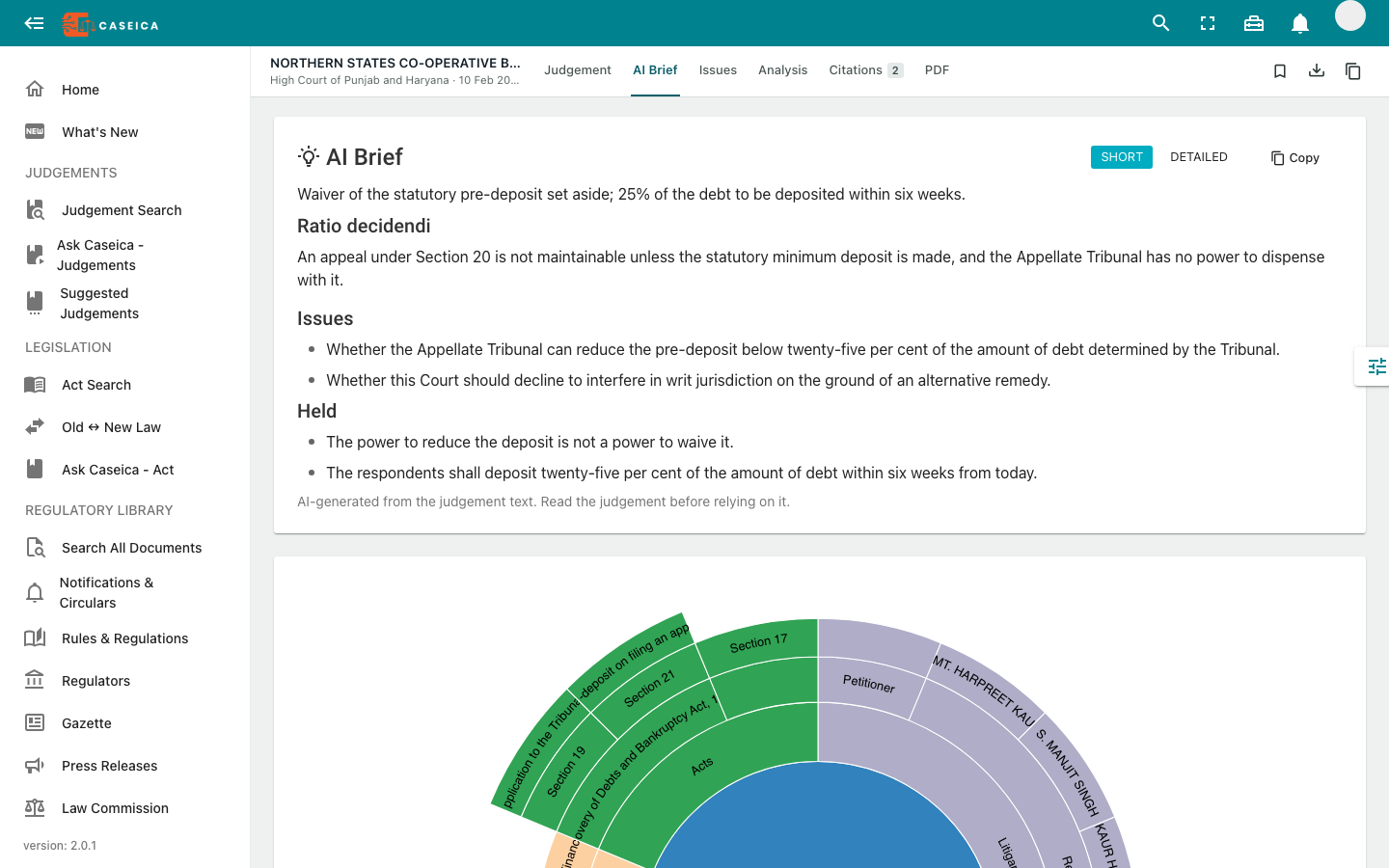
Caseica keeps judgment research inside the signed-in workspace. Public guides explain the workflow, but do not publish judgment records or make their text accessible through the public library. The image here is a fictional demonstration, not a reported decision.
Use the connection to find the passage
Open the source decision and inspect its citations area where available. Follow a reference into the connected material, then locate the passage that explains why it was cited. Preserve the distinction between what the earlier decision said and how the later decision used it.
If the connected document cannot be opened or the relevant passage is unavailable, leave the proposition unverified. A title or extracted citation is enough to suggest another research step, but not enough to support a conclusion about the case.
Treat assisted analysis as a reading aid
An AI brief or issue summary can give you an initial map of a long document. Compare each proposition that matters with the original text, including facts, procedural posture and qualifications. A fluent summary can omit an exception or compress different issues into one statement.
Citation links, extracted issues and summaries should lead you back to evidence. Do not infer that a judgment has been positively treated or remains controlling merely because it appears in a graph or recommendation. Check the relevant later treatment independently.
Capture the verification trail
For every proposition you retain, record the source identifier, relevant paragraph, connected authority and the reason for the connection. Keep a short note of any disagreement between the source and its summary so the research can be reviewed rather than repeated from scratch.
Stop when the evidence needed for the question has been checked, not when every link has been opened. A focused chain with verified passages is more useful than a large collection of unexamined references. Return to the working question whenever the citation path moves into a different issue.