
Legal citation research
A judgment is a starting point. Follow its available references to earlier decisions, explore later citing cases, and read each authority in context.
Get oriented before reading in depth.
Use available summaries, issues, and reasoning to identify what to read closely. Check each material proposition against the judgment.
- Brief lengths
- Issues and reasoning
- Underlying judgment
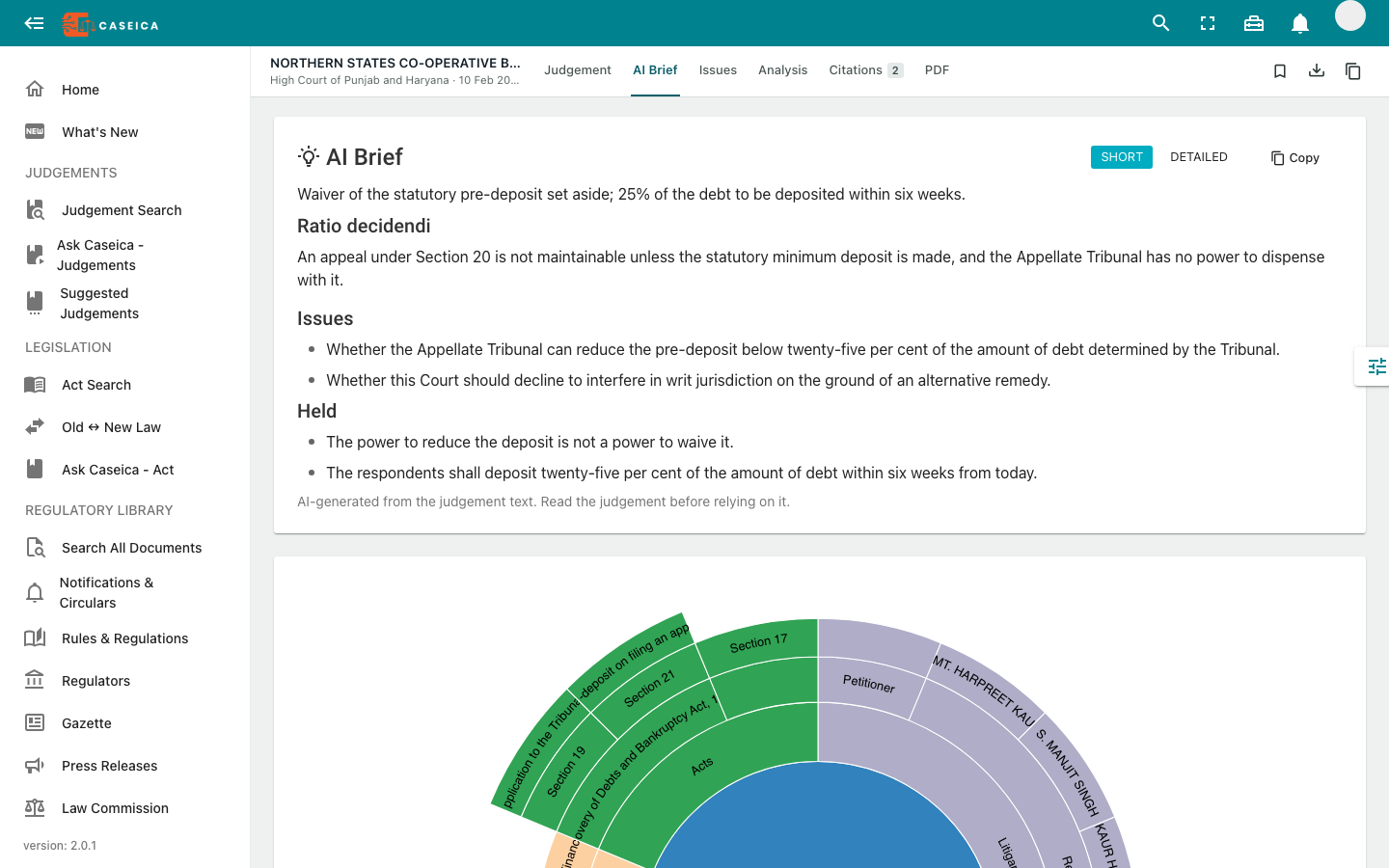
Follow the authorities a court referred to.
Explore available cited decisions from the judgment reader. Read the original passage to understand why the authority was mentioned.
- Available cited decisions
- Connected judgments
- Read the original context
Investigate where the decision appears next.
Explore available later citing decisions and the citation network. A connection is a research lead, not a certificate of legal status.
- Available citing decisions
- Citation network
- Independent verification
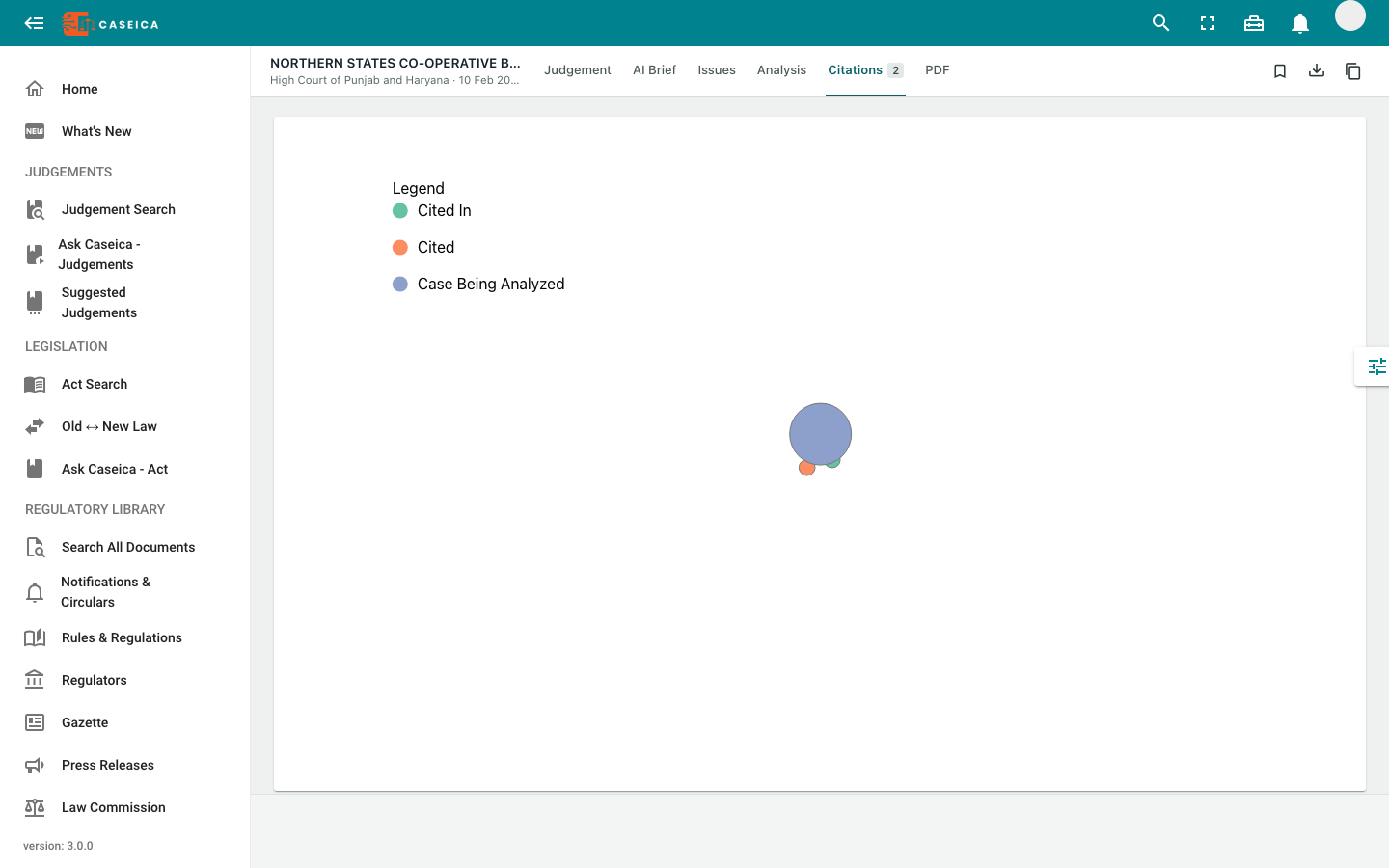
Cited decisions
Earlier authorities referenced in the judgment.
Your judgment
The facts, issue, and reasoning you are reading.
Citing decisions
Available decisions that refer to this authority.
Understand the connection before using the authority.
A citation link helps you find another decision. Its legal significance still depends on what the court actually said.
- Follow cited cases
- Explore available decisions referenced by the judgment you are reading, then open the underlying text.
- Explore citing decisions
- See available judgments that cite the current decision. Use the citation network to investigate connections.
- Return to the source
- Read the surrounding passage, the issue, and the reasoning. Distinguish a citation from agreement with the cited decision.
A research aid.
Not a validity certificate.
Citation matching can be incomplete or incorrect. A link does not establish that an authority remains good law, applies to your facts, or has been followed rather than distinguished.
Verify before relying. Check the primary judgment, subsequent treatment, and the applicable jurisdiction. Large citation networks may display a limited set of connections.
The statutory reference matters, too.
Move from the case to the provision. Explore available legislation references and read section text in context.
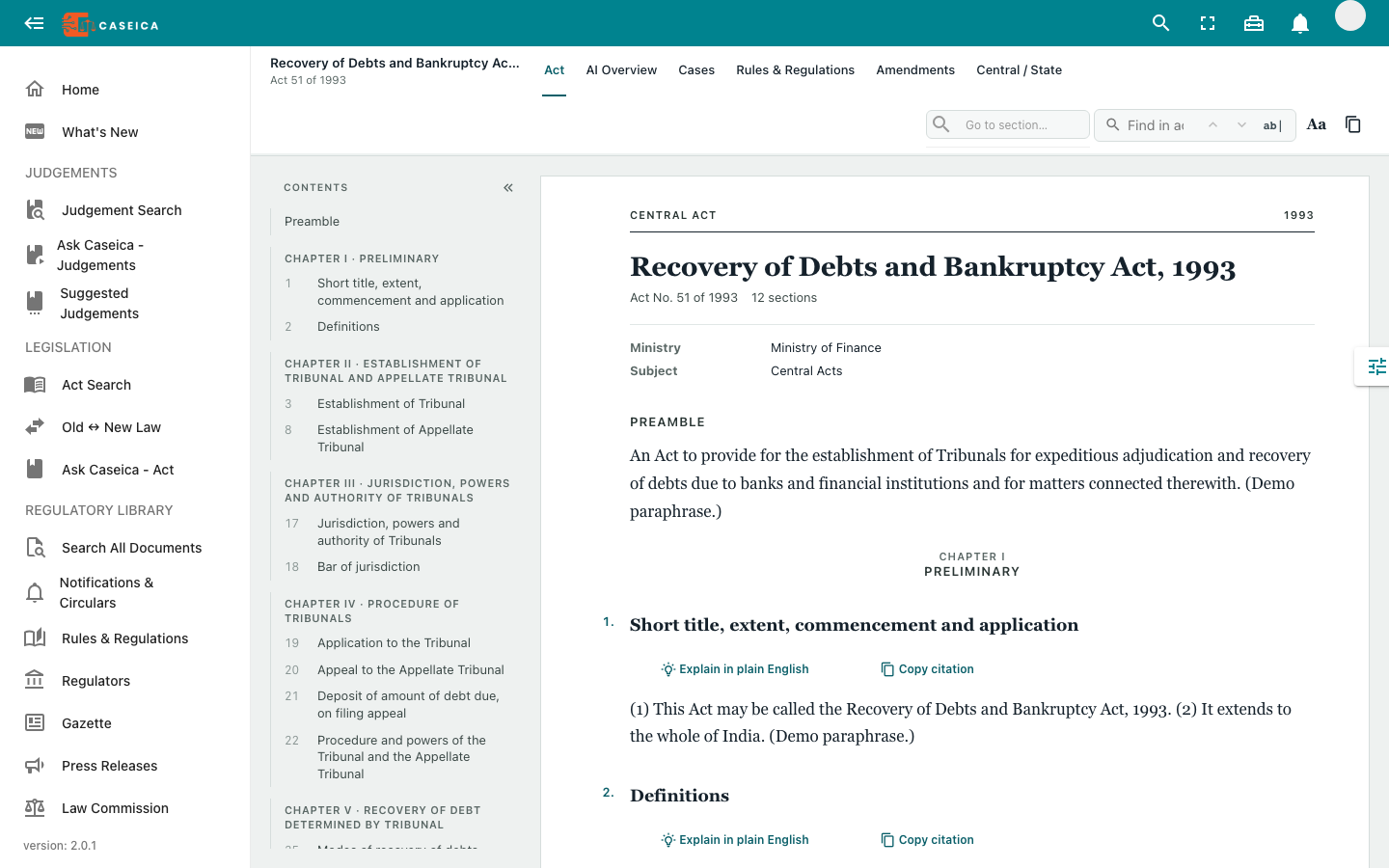
Build from the text.
Compare the available research plans for your practice.