The identity gap
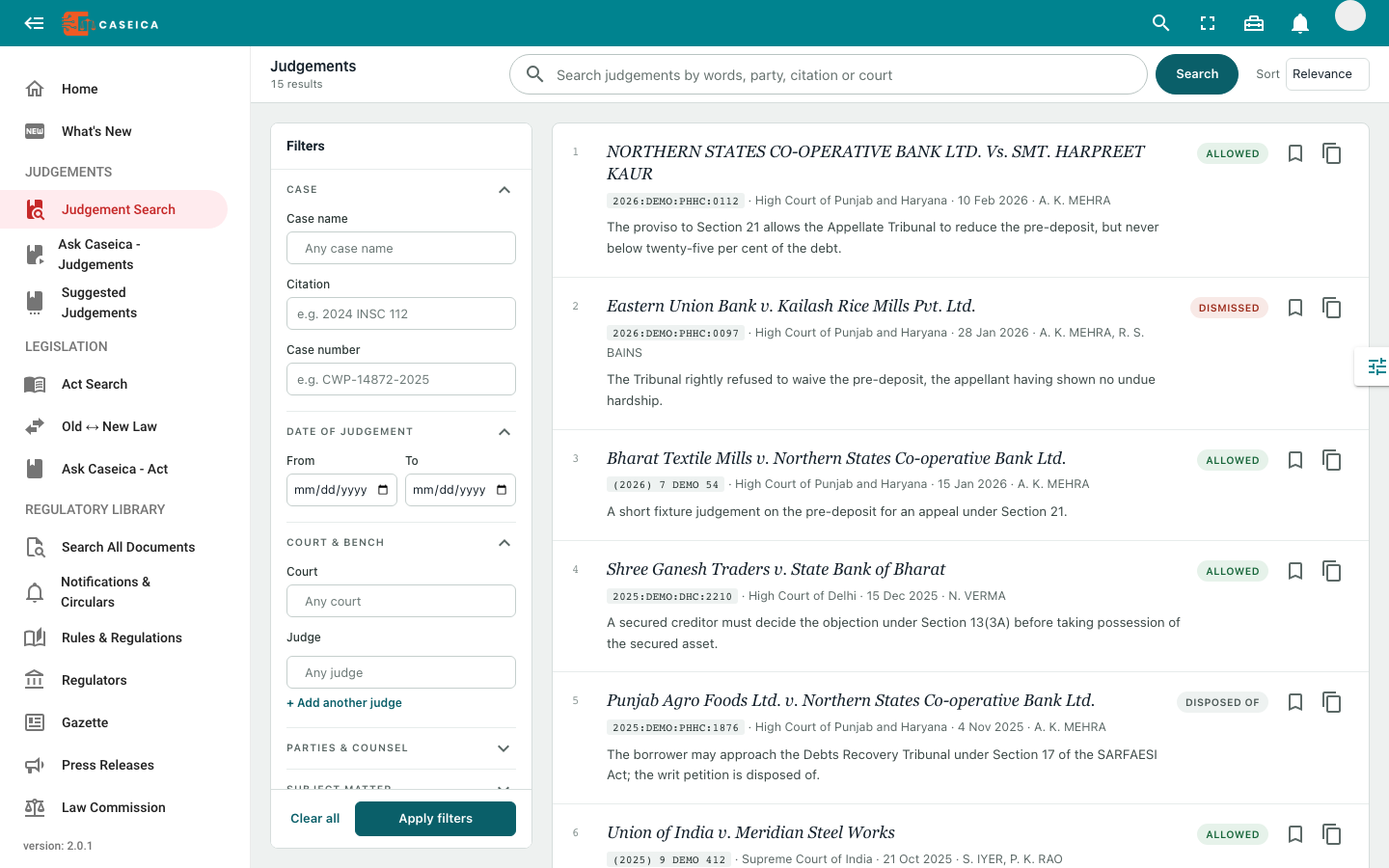
A result can match your words while referring to a different instrument, party or jurisdiction. The first review step is therefore identity: compare the source title and identifying metadata with the question. Search relevance is a discovery mechanism, not a certification that the document is the one you need.
This distinction is especially important when starting from a shortened citation or an informal name. Keep the original reference in your notes, and mark any uncertain match instead of silently replacing it with the first plausible result.
The context gap
An excerpt removes the surrounding text by design. That is useful when scanning results, but it can hide a condition, exception or different factual setting. Move from the result to the source and read around the relevant passage before deciding what the document supports.
Caseica's public library makes this boundary explicit: it offers a limited beginning of approved Acts and regulatory documents, while the rest remains behind sign-in. A public preview helps you choose the next research step; it is not presented as a complete research answer.
The version gap
A source can be genuine and relevant yet belong to the wrong period. Separate the date of publication, the date a change takes effect and the date relevant to the matter. Where the platform provides amendment or related-document links, use them as leads and verify the source text.
A "recently updated" label describes a platform record, not necessarily a legal change. Conversely, an older publication can still matter to a historical question. A useful research note explains why the selected version is relevant rather than simply recording the latest visible date.
The evidence gap
A summary becomes useful evidence only when its important propositions can be traced to the underlying material. Keep source quotations, assisted explanations and your own conclusions visibly separate. If you cannot identify the supporting passage, treat the statement as a question to investigate.
Before handing off the research, ask four questions: Is this the right source? Have I read the relevant context? Is this the right version for the question? Can another reader retrace the evidence? This checklist is a workflow aid, not a claim that the platform has independently validated every legal proposition.