Start with the identity of the Act
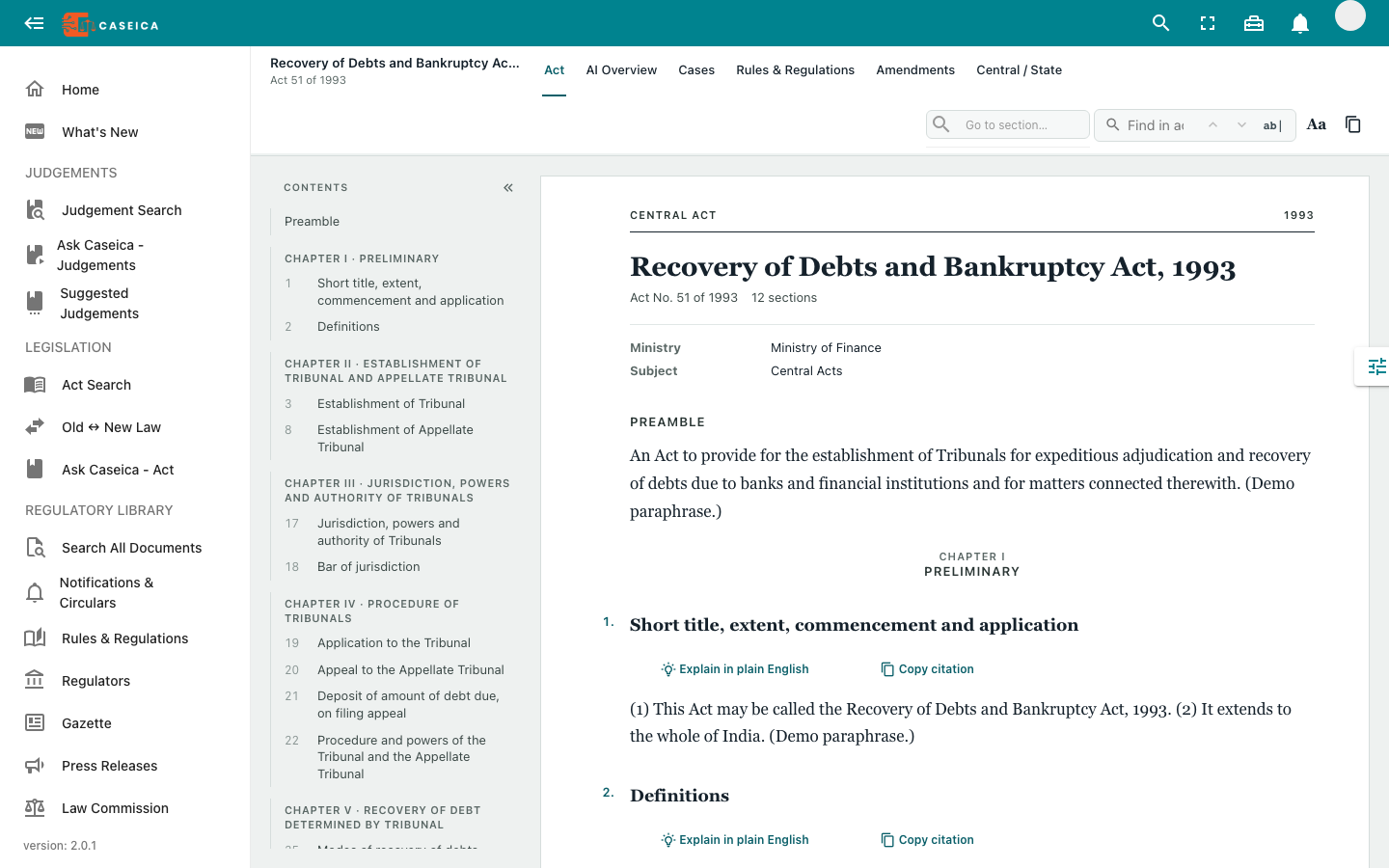
A familiar short title is a starting point, not a complete research reference. In Caseica, begin with Act Search and compare the title, Act number, year and jurisdiction before opening a result. A central and a state enactment can address similar subjects while being different instruments. Keep the identity of the source beside your working question.
The public library shows only approved introductory previews. Use a preview to establish whether the instrument is relevant, then sign in to continue in the full reader. A preview is deliberately incomplete: it cannot establish the meaning of an entire provision or the current state of the law.
Read around the provision
Use the contents panel to move through chapters and sections, and search within the Act for a term. Read the heading, definitions and surrounding provisions as well as the matching sentence. Record the section number and source identity rather than copying an isolated sentence into a note with no context.
The reader separates source text from assisted explanations. A plain-language explanation can help orient your reading, but it is not a substitute for the provision, its provisos or the conditions in connected sections. When the two appear inconsistent, return to the source and flag the discrepancy.
Check related material and time
Explore the reader's amendments and rules or regulations areas where material is available. Check dates and source references for each connected instrument. A later document is not automatically applicable to an earlier event, and an empty tab should not be interpreted as proof that no relevant material exists.
Before using a proposition in client work, compare it with the relevant official publication and the version required for your research date. Caseica can organize the path through these materials; the final version and applicability checks remain part of the research task.
Keep a compact verification record
Your working note should identify the Act, jurisdiction, provision, relevant date, connected instrument and primary source checked. Separate the source wording from your interpretation. Include unresolved questions explicitly so another researcher can pick up the work without repeating the initial search.
A useful stopping point is not simply finding a matching section. It is being able to show which text you read, why that version matters, and what related material still needs checking. This makes the research easier to review and more reproducible.