
Turn the question into document identifiers
Begin with the issuing authority, subject and approximate date. If you already have a circular number, retain its full form in your working notes. In the regulatory library, document types distinguish circulars from rules, notifications and other instruments. These distinctions help narrow a search without assuming that every relevant item uses the same wording.
Search progressively. Start with the strongest identifier, inspect the results, and then refine the jurisdiction or document type. A narrow search that returns nothing can reflect a different title or missing coverage; it does not establish that the instrument does not exist.
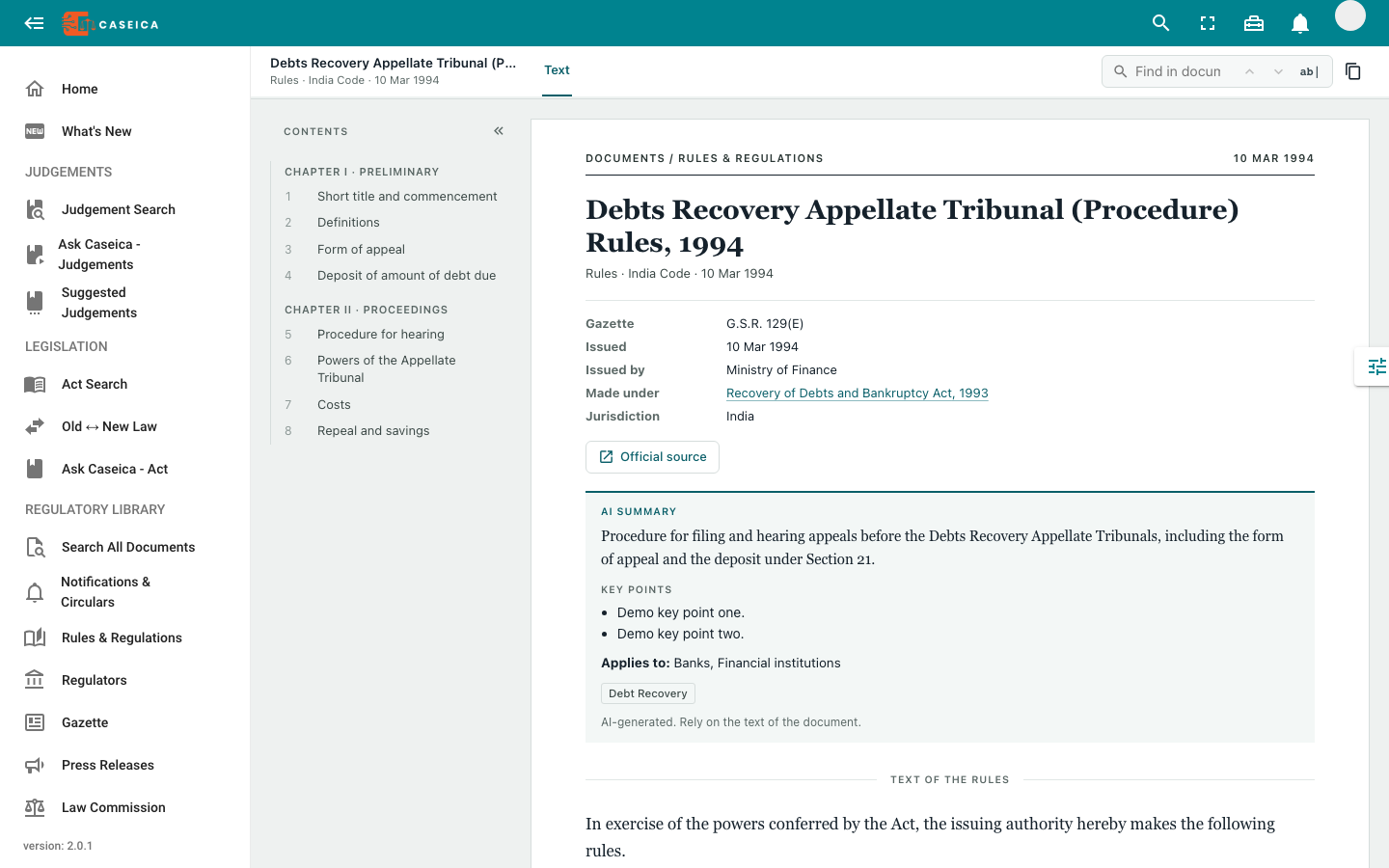
Inspect the document identity before the text
On the document page, compare the title, issuing authority, number and date against the reference you are investigating. Where a source link is available, inspect the original publication. Keep issue date and effective date distinct in your notes rather than treating them as interchangeable.
Public previews show only the beginning of approved documents. They are useful for discovery, but a cut-off introduction is not the operative direction. Sign in to inspect the available full document and check its source before drawing a conclusion.
Follow relationships, then verify them
Review linked Acts and related instruments where available. Look for a later clarification, amendment or replacement relevant to the question. A document relationship is a research lead: confirm what the connected text actually changes and whether that change applies to the period being considered.
Do not interpret a missing related-document link as a completeness guarantee. If the research depends on whether an instrument is still in force, check the issuing authority's current publications and the relevant official record in addition to the platform.
Make the result useful to the next reader
Record the instrument identifier, source, dates checked and the passages that answer your question. Keep your summary separate from quoted source wording. Where the document refers to another circular or notification, add that item to the verification list rather than silently assuming its contents.
A concise research handoff explains both what was found and the limits of the search. Naming an unresolved version issue is more useful than presenting a confident answer based only on a title, an excerpt or an assisted summary.